


Intrinsic safety barriers are essential components in modern industrial automation, especially in environments exposed to explosive gases, dust, or flammable vapors. Among the many brands available on the market, GMI (G.M. International) and Pepperl+Fuchs (P+F) stand out as trusted suppliers offering high-quality signal isolation and explosion protection. This article provides a complete promotional overview of both product lines, helping customers choose the most suitable solution for their applications.
Product Overview
GMI Intrinsic Safety Barriers
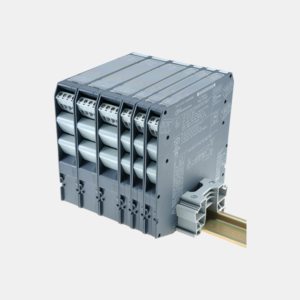
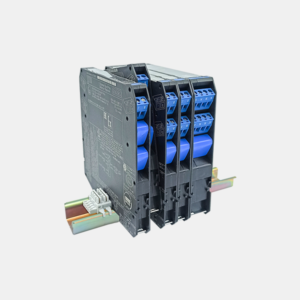
G.M. International offers a comprehensive range of intrinsic safety (IS) barriers designed to protect field devices located in hazardous areas. These barriers ensure safe signal transmission between the field and the control system by limiting voltage, current, and power levels. GMI products focus on cost-effective protection, robust performance, and compatibility with standard industrial instrumentation.
Pepperl+Fuchs Intrinsic Safety Barriers
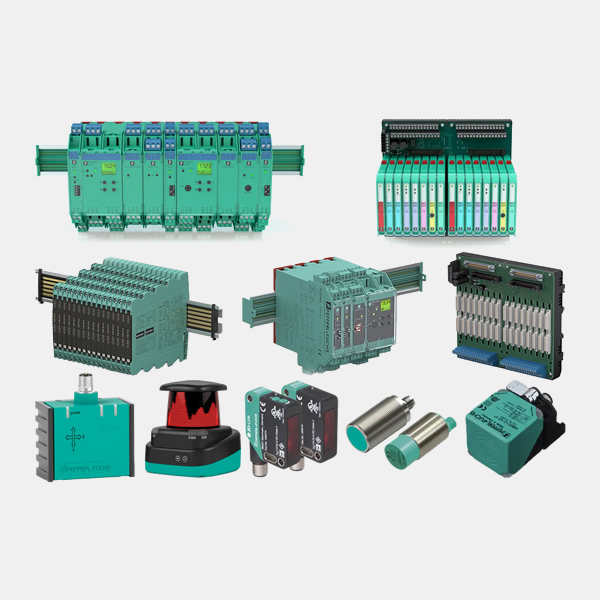
Pepperl+Fuchs is recognized as a global technology leader in explosion protection. Their IS barriers are widely adopted across industries due to their advanced design, broad product portfolio, and strict compliance with international certifications. P+F barriers offer enhanced diagnostics, modularity, and support for modern automation protocols such as HART, making them ideal for high-performance systems.
Advantages of GMI Safety Barriers
-
High cost-performance ratio
Ideal for users seeking reliable explosion protection at an economical price. -
Stable and robust design
Ensures consistent signal integrity even in harsh industrial environments. -
Simple installation and wiring
Suitable for general-purpose applications and fast project deployment. -
Compatible with most field transmitters and sensors
Supports standard analog signals such as 4–20 mA and contact signals.
Advantages of P+F Safety Barriers
-
Industry-leading technology & wide product range
Covers every application type including analog inputs, outputs, digital I/O, solenoid drivers, temperature modules, and more. -
Global certifications
Fully approved with ATEX, IECEx, FM, UL, and other international safety standards. -
Advanced diagnostic features
Many models support fault monitoring, line break detection, and HART transparency. -
Exceptional reliability & long-term stability
Favored by multinational plants and engineering companies demanding high availability.
Similarities Between GMI and P+F Barriers
-
Same functional purpose:
Both brands protect control systems from excessive energy entering hazardous areas. -
Intrinsic safety compliance:
Each product meets international IS standards for Zone 0, 1, and 2. -
Signal isolation & conversion:
Both support safe analog/digital signal transmission such as 4-20 mA, contact signals, and voltage inputs. -
Use in similar industries:
Commonly installed in oil & gas, chemicals, petrochemicals, power generation, and pharmaceuticals.
Product Differences / Differentiation
GMI Differentiation
-
Cost-effective solutions
GMI barriers are more budget-friendly, making them suitable for standard automation projects. -
Simplified product range
Easier selection and faster replacement, ideal for users with straightforward requirements. -
Local availability and fast delivery
Particularly advantageous for OEMs and integrators needing quick supply.
P+F Differentiation
-
More advanced and specialized product portfolio
Includes highly sophisticated modules, redundancy options, and communication capabilities. -
Intelligent features
Support HART passthrough, error diagnostics, and system integration with DCS/PLC platforms. -
Higher global brand recognition
Preferred for engineering projects requiring strict compliance and documentation.
Applications
Both GMI and P+F intrinsic safety barriers are widely used in:
-
Oil and Gas – sensor measurement, valve control, flow and pressure monitoring
-
Chemical & Petrochemical Plants – process monitoring and analyzer signals
-
Pharmaceutical Manufacturing – temperature, humidity, and level control
-
Food & Beverage Processing – automation in dust-hazard zones
-
Water & Wastewater – pump control and monitoring equipment
-
Power Generation – turbine control, instrumentation feedback loops
These barriers ensure safe and reliable operation in hazardous environments where explosive atmospheres may exist.
G.M. International Product Series
- Intrinsically Safe Isolators
- Termination Boards
- Non Intrinsically Safe Isolators
- Safety Relays
- Power Supplies
- Multiplexer Systems
- Surge Arresters
- Dummy and Pass-Through Modules
Pepperl+Fuchs Product Series
Recommended Popular Models
GMI Hot-Selling Models
-
GMI D5020 Series – Analog input barriers
-
GMI D5030 Series – Relay output barriers
-
GMI D5040 Series – Digital signal isolators
-
GMI D5070 Series – Temperature transmitter barriers
-
GMI D5080 Series – Solenoid/actuator drivers
Pepperl+Fuchs Hot-Selling Models
-
KFD2-STC5-1.2O – Analog input barrier
-
KFD2-SR2-EX1.W.LB – Isolated relay output module
-
KFD2-UT2-EX1 – Universal transmitter power supply
-
KFD2-SH-EX1.T.OP – Pulse/shuttle sensor barrier
-
KCD0-SD3-EX1.1045 – Solenoid Driver
-
KFD0-CS-EX2.50P – Repeater, 2-channel isolated barrier
Conclusion
Both GMI and Pepperl+Fuchs offer reliable intrinsic safety solutions designed to protect industrial processes operating in hazardous zones.
-
Choose GMI if you need a cost-effective, practical, and fast-deployment solution.
-
Choose P+F if you require high-end features, global certifications, and extensive system capabilities.
Their shared purpose—ensuring industrial safety and stable signal transmission—makes both brands essential components in any hazardous-area automation project.